Creator Agency Content Protection That Scales
Creator agency content protection helps stop leaks, protect privacy, and track takedowns and search delisting across every managed account with clarity.
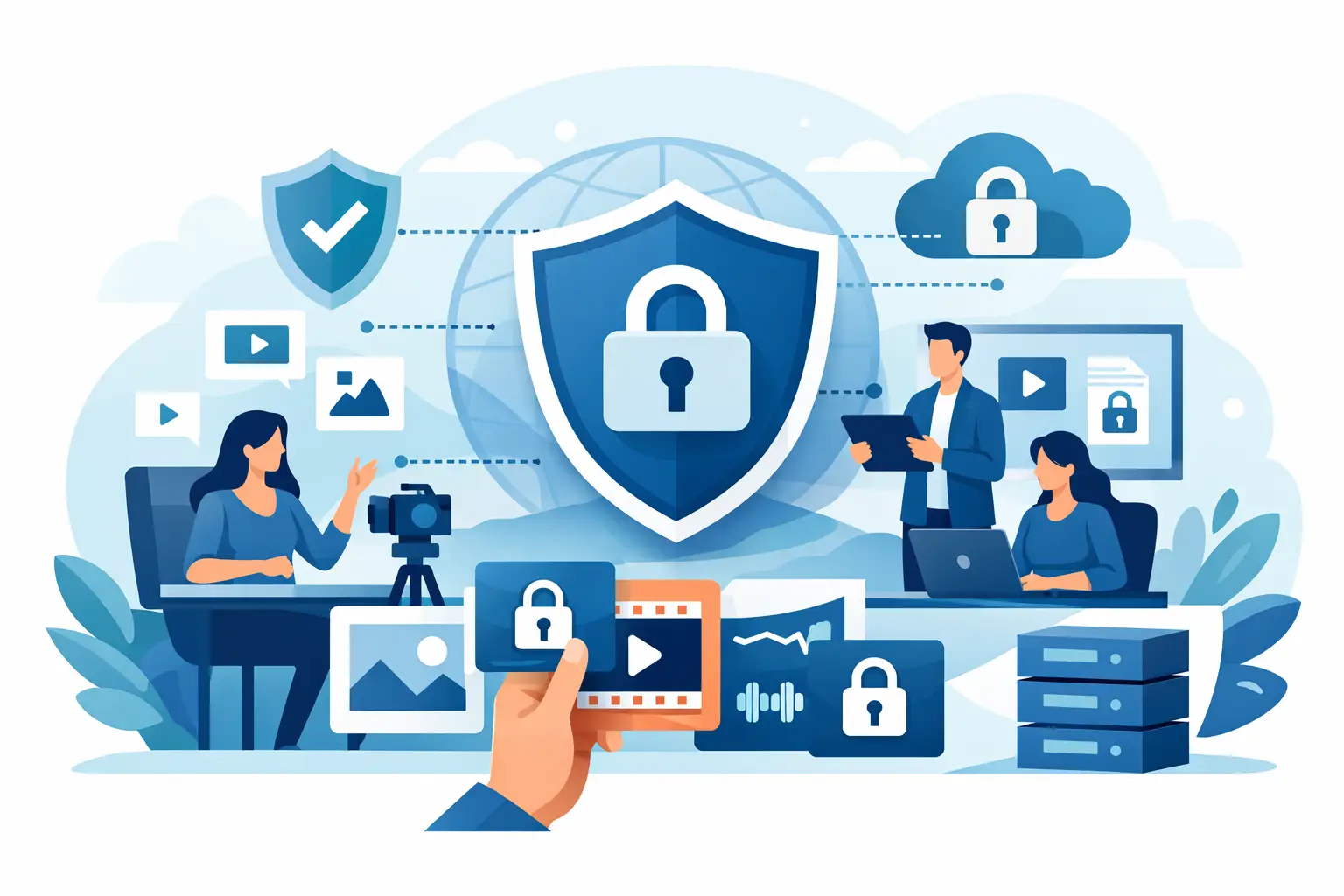
A creator agency can lose control quickly when one leaked set becomes dozens of reposts across piracy sites, forums, social feeds, messaging channels, and search results. Creator agency content protection is the operational system that prevents this work from becoming a daily scramble - giving agencies a way to detect leaks, act on them, protect creator identities, and track progress across every account they manage.
For agencies representing subscription creators, the stakes are personal as well as commercial. Leaks can reduce paid conversions, expose private material to unwanted audiences, damage a creator’s confidence, and consume hours that should be spent on growth. A serious protection process is not an occasional cleanup. It is continuous monitoring and enforcement built for the reality that removed content can reappear.
Why creator agencies need continuous protection
Manual leak searching does not scale. An agency might search a creator’s name, username, or a few known piracy sites, submit requests, and consider the issue handled. But reposting networks move faster than manual workflows. Content can be copied to mirror sites, buried in forum threads, posted in channels, or indexed under altered titles and filenames.
The problem becomes more complex as a roster grows. Each creator may use multiple aliases, platforms, content formats, and release schedules. Keeping a spreadsheet of URLs and emails may work for a single incident. It becomes unreliable when an agency needs to manage recurring leaks for ten, fifty, or hundreds of creators.
That is where ongoing protection changes the equation. Instead of waiting for a creator or fan to discover a leak, the agency has a process that continuously checks for exposure, initiates removal actions, monitors known sources for re-uploads, and reduces the visibility of infringing pages in search.
What effective agency content protection includes
A useful protection system addresses more than the first URL found in a search result. Agencies need coverage that follows leaked content through the places where it is posted, copied, and discovered.
Detection across high-risk channels
Leak detection should extend beyond standard search engines. Piracy sites, tube sites, forums, social platforms, messaging channels, and file-sharing destinations can all play a role in redistribution. Broad, expanding coverage matters because a creator’s content rarely remains in one place once it has been copied.
Detection is also an intelligence function. It gives an agency visibility into where a creator is being targeted, which sources repeatedly host material, and whether a previous removal has resulted in fresh uploads elsewhere. That visibility helps turn a scattered problem into an organized queue of actions.
Takedowns and search delisting are different actions
Agencies should distinguish between removing content from a host and reducing its discoverability in search. A takedown requests action from the website, platform, or service hosting the unauthorized material. A delisting request addresses search engine results that may lead people to infringing pages.
Both matter. Removing a page can stop access at the source, while delisting can make remaining or newly indexed copies harder to find through Google and Bing. Neither replaces the other. In many cases, a layered approach gives agencies better control over both availability and visibility.
Results depend on platform cooperation, the details of the report, and the jurisdiction involved. Some platforms respond quickly, while others may require additional review or may not act as expected. A credible agency workflow records those statuses rather than hiding the uncertainty.
Re-upload monitoring
One successful removal is not the finish line. Repeat uploaders, mirror domains, and content aggregators can bring the same material back online. Agencies need monitoring that continues after an initial action, especially for creators with a high public profile or content that has already circulated widely.
Re-upload monitoring also protects agency time. Rather than restarting the investigation from zero each time a creator finds another link, the protection process can identify new appearances and keep action moving in the background.
Privacy-first enforcement
Creators should not have to publish their legal name, home address, or personal contact details across every enforcement workflow. For agencies, this is more than a convenience. It is a safety requirement.
A privacy-first service can use its own enforcement details where appropriate, helping keep a creator’s identity out of direct contact with sites that host unauthorized material. This is particularly valuable for adult and subscription-content creators, whose privacy risks can be disproportionate when leaked content spreads.
How to build a creator agency content protection workflow
The strongest agency process is consistent, not improvised. Start by organizing the information needed to identify each creator’s work: creator names and aliases, known usernames, official profile URLs, the types of content being protected, and any recurring leak sources. Accurate onboarding improves detection and reduces confusion when similar names appear online.
Next, establish clear internal ownership. Your team should know who can add creators, review dashboard updates, flag urgent issues, and communicate status to talent. Protection is more effective when it is part of creator operations rather than an emergency task assigned after a leak has already gained traction.
Then, centralize reporting. A live dashboard gives agencies a single view of detected matches, enforcement actions, removals, pending cases, search delisting activity, and recurring sources. That matters when a manager needs to answer a creator’s question with facts rather than vague reassurance.
Finally, keep expectations realistic. The goal is to reduce exposure, remove unauthorized copies where possible, suppress discoverability, and maintain pressure against re-uploads. It is not a promise that every platform will respond identically or that every copy can be removed permanently. Agencies earn trust by showing the work, the status, and the next action.
Where automation protects agency margins
Without automation, content protection can become an expensive manual service. Team members spend time searching, collecting evidence, writing repetitive reports, following up, and updating creators one by one. That work is difficult to price, hard to standardize, and vulnerable to missed uploads.
Automation helps agencies protect more creators without treating every leak as a custom project. Continuous scanning can surface potential infringements at scale. Automated enforcement workflows can initiate actions faster than a manual inbox process. Centralized tracking can reduce the administrative burden of keeping talent informed.
The trade-off is that automation needs thoughtful setup. Creator profiles, aliases, and protected assets must be defined clearly. Teams should review status data and understand that some detections may need verification before action. The right platform does not remove agency judgment - it gives that judgment better coverage and faster execution.
Nemaries is built around this end-to-end model: continuous leak detection, automated DMCA enforcement, Google and Bing delisting, re-upload monitoring, and live status tracking while keeping the creator’s identity private throughout the process where possible.
What creators expect from their agency
Creators do not need a lecture on copyright procedure when they discover their work has been reposted. They need to know that someone is watching, action is being taken, and their privacy is being treated seriously.
An agency that offers visible content protection delivers a stronger operational promise. It says: your premium work is not being left exposed while we wait for the next complaint. It also gives managers a more grounded way to communicate during stressful moments. Instead of promising an outcome they cannot control, they can show what was found, what action has been initiated, and what is still being monitored.
That transparency matters for retention. Creators are more likely to trust an agency that protects the value of their work after it is published, not just before it is promoted.
Measure protection by control, not just removals
Removal counts are useful, but they are not the only measure of progress. Agencies should also watch how quickly new leaks are identified, how many search results are delisted, how often content returns after removal, and whether creators can see clear statuses without chasing their manager for updates.
A high number of detections does not always mean protection is failing. It can mean monitoring is finding exposure that would otherwise have gone unnoticed. Likewise, a pending status is not necessarily inactivity. It may reflect a platform’s review process. The value is in having a documented, ongoing response rather than silence.
When creators know their work is being watched, their identity is being guarded, and every reported link has a visible path forward, they can return their focus to creating, selling, and building a business that feels safer to own.
Start protecting your content
Automatically scan your digital content, detect infringements, and send removal requests with Nemaries.
Get Started