OnlyFans Copyright Management That Protects Income
OnlyFans copyright management helps creators find leaks, remove copies, reduce search visibility, and protect identity with ongoing monitoring and action.
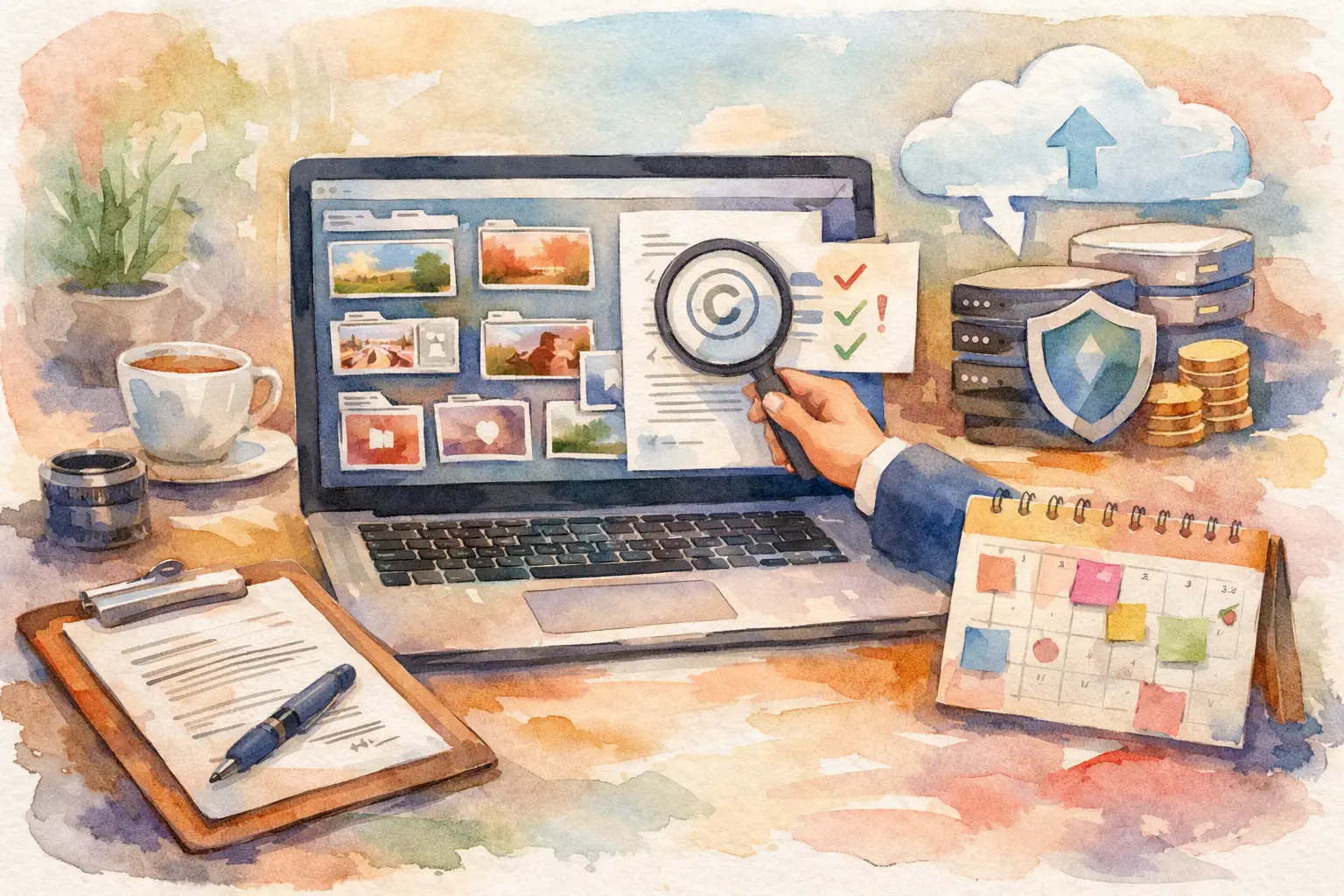
A leak is rarely a one-page problem. A set posted to a piracy site can be copied into forum threads, repackaged on tube sites, shared through messaging channels, and indexed by search engines before a creator has even found the first URL. Effective OnlyFans copyright management is the system that turns that chaos into a controlled response: identify the copies, act against the hosts, reduce search exposure, and keep watching for re-uploads.
For creators and agencies, the real cost is not limited to a lost subscription. Reposted premium content can weaken exclusivity, drain time, create safety concerns, and leave someone constantly searching for their own work. The goal is not to chase every bad actor personally. It is to build ongoing protection that does not depend on your identity being exposed or your attention being available around the clock.
What OnlyFans copyright management actually covers
Copyright management is broader than sending a single takedown request. It is an operational process for protecting original photos, videos, and other owned content after unauthorized redistribution occurs.
First comes detection. Leaks may appear across piracy domains, adult tube sites, forums, social networks, messaging channels, image hosts, and search results. Manual searching can find obvious copies, but it is slow and unreliable. Different file names, cropped previews, mirror domains, and closed communities make it easy for reposts to stay hidden.
Next comes enforcement. When an unauthorized copy is found, a copyright removal request can be submitted to the host, platform, or relevant service. This is commonly called a DMCA takedown process, though the available workflow and response can vary by provider, location, and the facts of the case. A takedown targets the page or file where the content is hosted.
Search delisting is a separate layer. Even after a host removes material, old result pages, cached references, or duplicate URLs may still lead people toward the leak. Requests to reduce visibility in Google and Bing can make removed or infringing pages harder to discover. Delisting is not the same as removing the source file, but it matters because discoverability drives traffic.
Finally, there is monitoring. A leak that disappears today can return tomorrow under a new URL. Copyright management only becomes protective when detection and enforcement continue after the first round of removals.
Why a one-time takedown is rarely enough
A single request may resolve a single URL. It does not automatically address mirrors, copied thumbnails, search listings, or reposts made while the original page was live. That is why creators often feel as if leaks keep coming back. In many cases, they are not seeing the same problem repeat by chance. They are seeing the normal distribution pattern of stolen digital content.
The practical trade-off is simple: a one-time cleanup may cost less upfront, but it can leave you back at square one when copies reappear. Ongoing protection requires a recurring process, yet it reduces the need to rebuild your evidence, searches, and reporting workflow each time a new leak surfaces.
This is especially relevant for agencies managing multiple creators. Without a centralized system, each talent can end up with separate spreadsheets, screenshots, email accounts, and incomplete status updates. That creates blind spots and makes it difficult to determine what has been found, what is pending, and what needs another action.
The four layers of a stronger protection system
1. Continuous leak detection
Detection should reach beyond major search engines. High-risk reposting often happens in spaces that are poorly indexed, short-lived, or built around rapid sharing. A meaningful monitoring program scans a broad and expanding range of piracy sites, tube sites, forums, social platforms, messaging channels, and search engines.
Coverage matters, but relevance matters too. The system should focus on identifying content and pages connected to the material you want protected, rather than burying you in vague alerts. For a creator, that means less time checking random results and more time reviewing actionable findings.
2. Host and platform removal actions
When a verified unauthorized use is found, the next step is to initiate an appropriate removal action. Good enforcement is organized, documented, and designed to give the receiving platform enough information to assess the request.
No service can honestly promise that every host will respond at the same speed or reach the same decision. Some platforms act quickly, while others have slow, inconsistent, or limited reporting channels. Still, a structured, high-volume enforcement process is far more effective than waiting until a leak becomes widely shared.
3. Google and Bing delisting
A page can be damaging because it is visible, even when the underlying host is difficult to reach. Delisting work addresses this exposure by seeking to suppress infringing URLs from prominent search results.
Think of removal and delisting as two different controls. Removal aims to take the content down at its source. Delisting aims to reduce the path people use to find it. The strongest response pursues both where appropriate, then monitors whether new indexed URLs emerge.
4. Re-upload monitoring and visible status tracking
Protection should not disappear into an email inbox. A live dashboard gives creators and agency teams a clear view of discovered leaks, actions initiated, removals confirmed, and items still awaiting review or platform response.
That visibility has a practical benefit: it replaces uncertainty with an operating record. You can see that action is underway without repeatedly checking pages yourself. It also helps agencies coordinate protection across a roster while maintaining clean separation between creators' accounts and cases.
Protect your work without exposing more of yourself
Many creators hesitate to submit takedown requests because they do not want their legal name, address, or personal contact details passed around to the sites hosting stolen content. That concern is reasonable. Copyright enforcement should not force someone to trade privacy for protection.
An anonymity-first enforcement setup can use the platform's details in the process rather than placing the creator's personal identity at the center of every request. This does not change the need for accurate ownership information and good-faith reporting, but it can substantially reduce unnecessary exposure.
Privacy is also about reducing emotional exposure. Searching for leaked content manually can be exhausting, particularly when results are repeated across hostile or exploitative sites. Delegating detection and action allows a creator to focus on producing, publishing, and running their business instead of repeatedly confronting the infringement.
A practical workflow for creators and agencies
Start by defining the content that needs protection. This may include current subscription material, older archives, paid bundles, specific photo sets, videos, or a creator's name and recognizable branding. Clear inputs improve monitoring and make findings easier to review.
Then establish a continuous reporting process instead of relying on occasional panic searches. Review discovered URLs, confirm what requires action, and track outcomes in one place. Avoid contacting uploaders directly, arguing in comment sections, or publishing personal information about suspected pirates. Those reactions can increase risk without improving removal results.
Use takedowns and search delisting together when the situation calls for both. If a page is still accessible, host removal is the priority. If it appears prominently in search, delisting can help reduce the page's reach while other actions are pending. If a copy resurfaces, treat it as a new enforcement item rather than proof that the entire process failed.
For agency teams, assign clear access and review responsibilities. A centralized dashboard can preserve oversight without giving every staff member unnecessary access to sensitive creator details. Consistent processes also make it easier to identify recurring sources and prioritize the highest-impact leaks.
Where Nemaries fits
Nemaries is a legal-backed brand-protection and automated DMCA enforcement platform built for this ongoing work. It combines continuous scanning, removal actions, Google and Bing delisting, re-upload monitoring, and real-time dashboard statuses while keeping the creator's identity private in enforcement workflows.
It is not a substitute for personalized legal counsel, and outcomes always depend on platform cooperation and case-specific circumstances. Its value is operational: replacing fragmented searches and repetitive reporting with a discreet system that continues working after the first leak is addressed. Creators who need recurring protection can review pricing or register when they are ready to define what they want monitored.
Your content is part of your income, your reputation, and your sense of control. Put a process behind it that keeps looking, keeps acting, and lets you get back to creating without carrying every leak alone.
Start protecting your content
Automatically scan your digital content, detect infringements, and send removal requests with Nemaries.
Get Started