Manual Notices Versus Automation for Leaked Content
Manual notices versus automation: see why continuous detection, private enforcement, and delisting give leaked content less room to spread online fast.
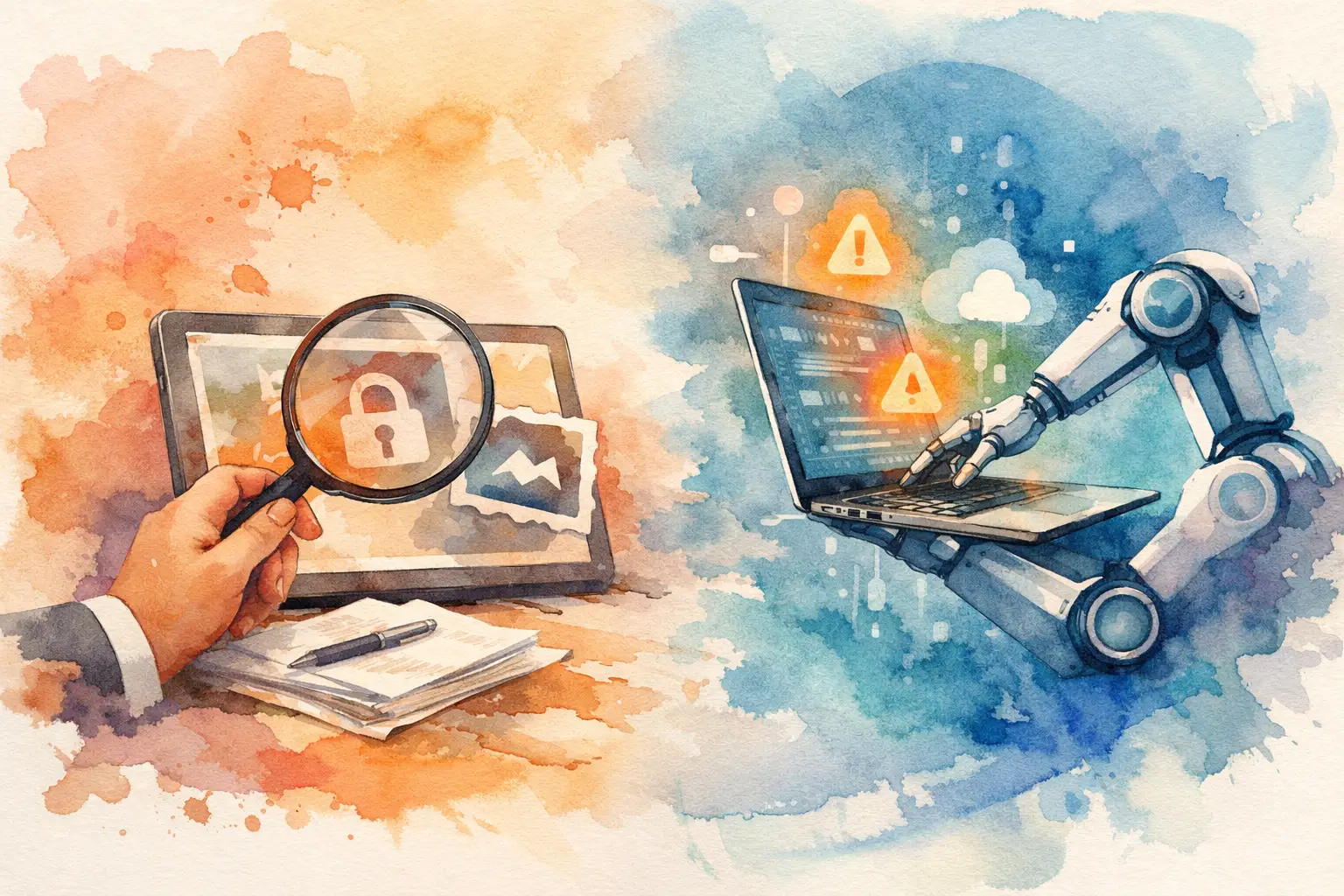
A leaked post can be copied to a forum, mirrored to a tube site, shared in a private channel, and indexed in search before a creator finishes submitting one removal request. That is the real difference in manual notices versus automation: one approach reacts to the leaks you happen to find, while the other is built to keep looking after you step away.
For creators and agencies protecting premium content, this is not simply an admin decision. It affects privacy, revenue, stress, and how much control you retain when unauthorized copies start circulating.
Why manual enforcement becomes a full-time job
Manual enforcement usually starts with a search. You look for your name, watermark, captions, or recognizable images. When you find a copy, you document the URL, identify the platform or host, locate its reporting process, prepare a notice, and submit it. Then you wait, follow up if necessary, and begin again when the same content appears somewhere else.
For a single, isolated repost, this can be a reasonable response. It may also be appropriate when a creator needs to review a sensitive situation personally before taking action. Manual reporting gives you direct visibility over each submission and can feel more controlled at first.
The problem is scale. Piracy does not behave like a single incident. Leaked content often travels through repost networks, indexing pages, social accounts, message boards, and search results. A removal from one host does not automatically remove copies on other domains. It also does not necessarily remove the search results that helped people find the content in the first place.
Manual work places the burden on the person already affected by the leak. It can mean exposing your legal name or personal contact details in reporting workflows, maintaining spreadsheets of URLs, and repeatedly revisiting material you did not consent to have shared. For many creators, that is more than inconvenient. It is exhausting.
Manual notices versus automation: the operational difference
The strongest case for automation is not that a person never needs judgment. It is that repetitive, time-sensitive work should not depend on a creator being online, available, and able to search every corner of the web.
An automated protection workflow begins with continuous detection. Instead of checking only the sites you know, a platform monitors a broad and growing index of piracy sites, tube sites, forums, social platforms, messaging channels, and search engines for likely matches. When a new copy is identified, it can enter an enforcement workflow without waiting for the next manual search.
That matters because speed can limit exposure. The longer a file or page remains accessible, the more opportunity it has to be copied, shared, cached, and indexed. Fast action cannot guarantee that every copy disappears, but it can reduce the window in which a leak gains traction.
Automation also makes repeated enforcement manageable. A creator might find five URLs on their own. An agency managing multiple talent accounts may face hundreds of URLs across different websites and formats. The task is no longer just filing notices. It is organizing detection, evidence, submissions, platform responses, follow-ups, re-uploads, and search suppression at volume.
Takedown and delisting solve different problems
A common mistake is treating a removed search result as the same thing as removed content. They are related, but they are not identical.
A takedown targets the host or platform where the unauthorized content is available. When the platform cooperates and the claim meets its requirements, the goal is to remove or restrict access to that specific page, post, or file.
A delisting request targets discoverability in search engines such as Google and Bing. The goal is to reduce the visibility of infringing URLs in search results. Delisting can be valuable when a host is slow to act, when a URL has already been indexed, or when search traffic continues directing people to the leak.
Neither action replaces the other. A page can be delisted while remaining live on its host. A file can be removed from a host while an outdated search result persists temporarily. Effective brand protection treats removal and discoverability as separate tracks that need ongoing attention.
Privacy is where manual reporting can cost more
Many creators choose manual reporting because it appears free. But the visible cost is only the time spent filing forms. The less obvious cost can be personal exposure.
Some enforcement processes ask for contact information and statements from the rights holder. Requirements vary by platform and jurisdiction, but providing details directly can create a privacy concern for creators who use stage names, protect their home address, or keep their personal identity separate from their public brand.
An anonymity-first enforcement service can act as a protective layer by using its own details within appropriate enforcement workflows rather than placing a creator's personal information in every submission. That does not make every platform process identical, and outcomes depend on the platform, the available evidence, and the facts of each case. It does, however, reduce the number of situations where a creator must personally engage with the operator hosting the stolen material.
Privacy also means emotional distance. You should not have to spend every evening tracking accounts that repost your work or communicating with sites that profit from unauthorized distribution. A structured process restores a boundary between your business and the people attempting to exploit it.
What automation should provide beyond a notice
Not all automation has the same value. A tool that only sends notices faster can still leave you blind to what happened next. For meaningful protection, the workflow needs to cover the full cycle: detection, action, status tracking, re-upload monitoring, and search suppression where relevant.
Nemaries is a legal-backed brand-protection and automated DMCA enforcement platform designed around that cycle. It continuously scans for unauthorized distribution, initiates removal actions, supports Google and Bing delisting efforts, and monitors for re-uploads. Its live dashboard gives creators and agencies a centralized view of reported URLs, enforcement activity, and current statuses without turning leak response into a scattered inbox-and-spreadsheet operation.
That visibility is essential. Automation should not feel like sending your content into a black box. You need to know what was found, what action was initiated, which items are pending, and where more attention may be needed. A clear dashboard turns a stressful, fragmented problem into a trackable operational process.
When manual notices still make sense
Automation is the stronger fit for ongoing protection, but manual notices are not obsolete. They can make sense if you have one known URL, a limited short-term issue, or a platform with a straightforward reporting system that you are comfortable using.
They may also be useful when a report involves context that a standard workflow cannot capture. Some situations call for personalized legal guidance, particularly where ownership is disputed, there are contractual questions, or a platform response raises concerns beyond routine copyright enforcement. A protection platform is not a replacement for advice from an independent attorney when that level of counsel is needed.
The deciding factor is frequency. If leaks are recurring, content is being reposted across multiple locations, or you manage more than one creator, manual reporting stops being a careful choice and becomes an operational bottleneck.
Build protection around continuity, not panic
The best time to set up monitoring is before the next leak appears in search results. Define the content and brands that need protection, establish an enforcement workflow that preserves your privacy, and make sure you can see activity as it happens. For agencies, the same principle applies across every managed creator: centralized oversight is safer than waiting for each person to discover a leak alone.
Removal outcomes vary. Platforms may have different policies, response times, evidence requirements, and levels of cooperation. Some URLs will be resolved quickly; others may require follow-up or remain difficult to address. But continuous detection and coordinated action give unauthorized copies less time, less visibility, and less room to multiply.
Your work deserves more than a one-time response after the damage has spread. Put a system in place that keeps watch, protects your identity, and gives you a clear path back to control. Review protection options through pricing and registration when you are ready to stop chasing leaks manually.
Start protecting your content
Automatically scan your digital content, detect infringements, and send removal requests with Nemaries.
Get Started